
Keep public research and controlled collections distinct.
Names the record source or collection controller.
Confirms access, retention, and approval.
Tracks the authorized collection with its own ID.
Begin with the office that holds the record
Cook County’s FOIA guidance says each County office responds to its own request, so start by identifying the office that created or maintains the information. That is more useful than sending a broad request to the County generally. Give the office a precise topic, approximate dates, known case or recording reference, and the kind of access sought.
For historical material, the Cook County Historic Archives and Records Office offers remote reference inquiries while it is closed to public patron visits. Its page separately directs real-estate, property, and parcel questions to the County Clerk’s Recordings Division. Those distinct routes are a reminder that ‘Cook County records’ is not one collection or one custody system.
Use public research tools as leads, not automatic reproduction rights
The County’s Court Records and Archives page describes online case information as an electronic docket and not the official court record. It identifies official paper files or Clerk repositories as the authoritative record locations. A case number, division, party name, docket entry, or named record set can therefore be a strong retrieval reference, but it does not by itself establish access to every underlying document.
For example, the page lists Naturalization Declaration of Intention records among online case-search resources. A researcher can record the search result and date range, then confirm the appropriate custodian and any applicable access limits. A FOIA request or court-record inquiry seeks an existing eligible record; it is not a request to digitize an archive’s collection.
Create an internal collection ID for materials you control
Cook County’s archive page does not publish a public catalogue identifier for every inquiry, so do not invent an archival call number. If an agency, library, engineering group, or archive has authorized stewardship of physical microforms, assign its own stable identifier, such as CC-PLN-014. Pair it with creator, series title, date span, format, container or reel number, and a link to any existing index.
That controlled ID should stay attached to the inventory, sample review, filenames, and planned metadata. It supports repeatable handoffs without implying ownership of County-held records. For public research, cite the custodian, case or docket number when available, and the exact record type instead.
Treat access and retention as review points
Before copying, transferring, scanning, or releasing a collection your organization controls, verify the applicable retention schedule, privacy restrictions, confidential or sealed material, copyright or license terms, and any legal, audit, or operational hold. The public nature of a docket entry or a County archive description does not settle those questions for a separate collection.
This is educational planning information, not legal advice. Do not use this guide to approve disclosure, retention changes, or destruction. The organization’s records officer, official custodian, and counsel where needed should make those decisions under the applicable rules.
Document readiness before discussing conversion
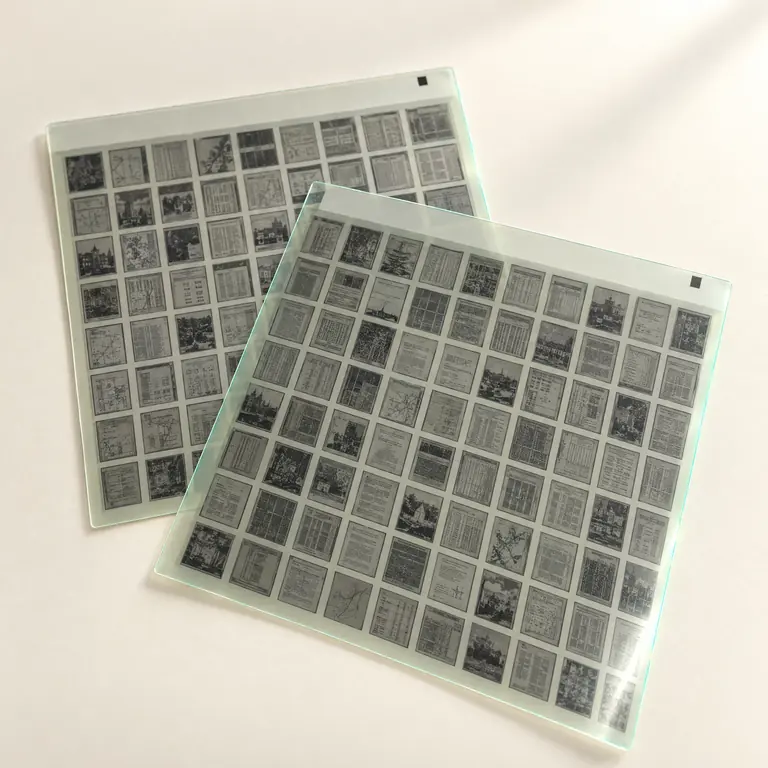
A useful next step is to write down whether the project is public research or an organization-controlled collection. For controlled microfilm, microfiche, or aperture cards, count units by format, photograph representative labels, note condition concerns, name the intended users, and select the lookup fields that people actually need.
National Microfilm can discuss nationwide planning for eligible organization-controlled collections from Moorestown, New Jersey. The national service and preparation links below help frame that conversation; they do not represent a Cook County office, a local archive service, or authority over County records.
Common questions
Where should a Cook County public-record request go?
Start with the County office that maintains the information. Cook County’s FOIA guidance says each office responds to its own requests; court records and archival material may follow different custodian processes.
What identifier should our controlled microform inventory use?
Use an internal stable ID, such as CC-PLN-014, alongside creator, series, dates, format, and reel or fiche control data. Do not present that ID as a Cook County archival call number.
Sources & further reading
These references explain technical formats, standards or destination requirements. They do not imply endorsement of National Microfilm.