
Nationwide microform scanning & digital access (800) 477-0847
GOVERNMENT PROCUREMENT

GSA Schedule

Contract # 47QSMS24D006Y
THE VISUAL FORMAT LIBRARY

Know the format. Keep the context.

A drawer of film can hold several different formats—and several different clues. Identify the carrier, understand the specific type, and plan digital access with the context intact.

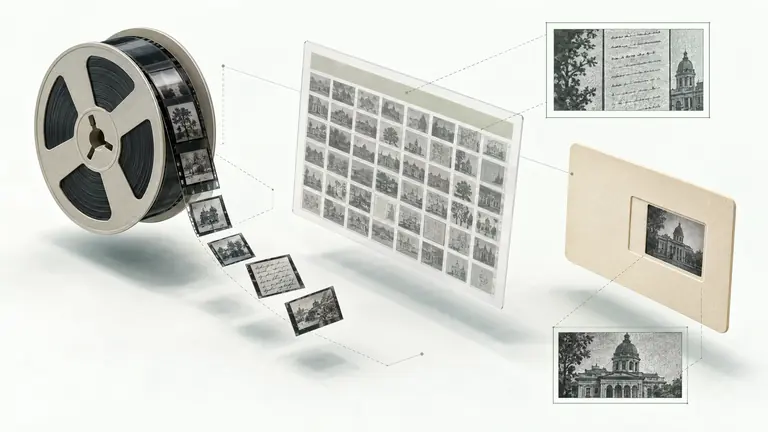
Conceptual layered microform format illustration
Illustrative concept, not a product specification.
LEARNING PATH

Start with the question that unlocks the next one.

What is it?Identify the physical format.
How is it found?Separate identifiers from text search.
Where does it go?Plan the handoff before delivery.
These guide themes are planning prompts, not universal specifications.
START WITH THE SHAPE

Small records.
Important differences.

Compare the families below. Then choose a format for a detailed identification and digitization guide.

FORMAT ORIENTATION

Microfilm, microfiche or aperture card?

These family names describe different physical carriers. The details beneath each family help establish what is in a collection before planning a scan or index.

01Continuous sequence
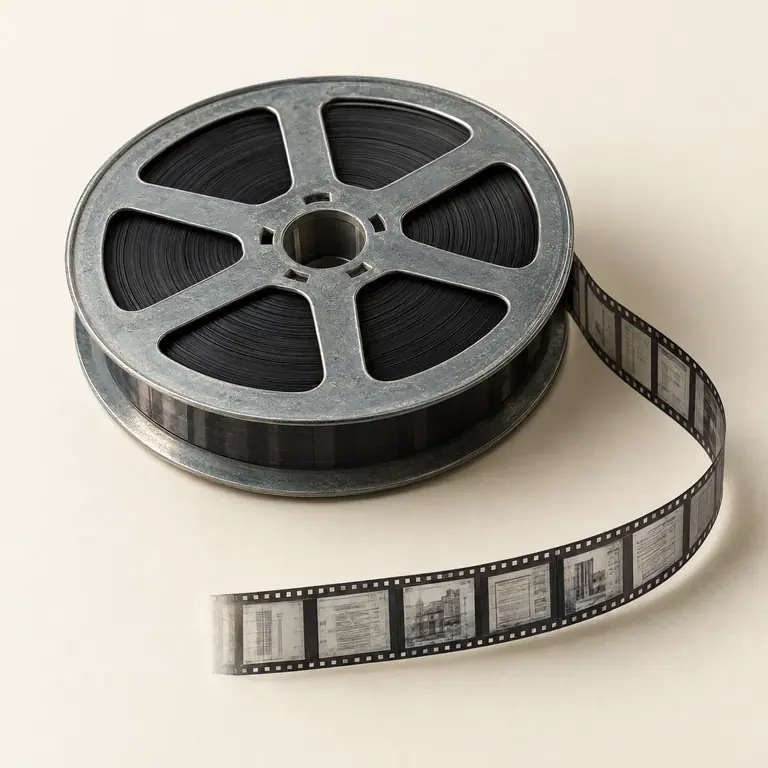
Original educational illustration of a microfilm reel

Microfilm

Film held on a reel or within a carrier, arranged as a continuous sequence of images.

  • 16mm film widthA measured film width.
    Guide
  • 35mm widthA different measured film width.
    Guide
  • CartridgeSingle hub carrier.
    Guide
  • CassetteTwo enclosed cores.
    Guide
02Sheet, grid or channels
Original educational illustration of source-document microfiche

Microfiche

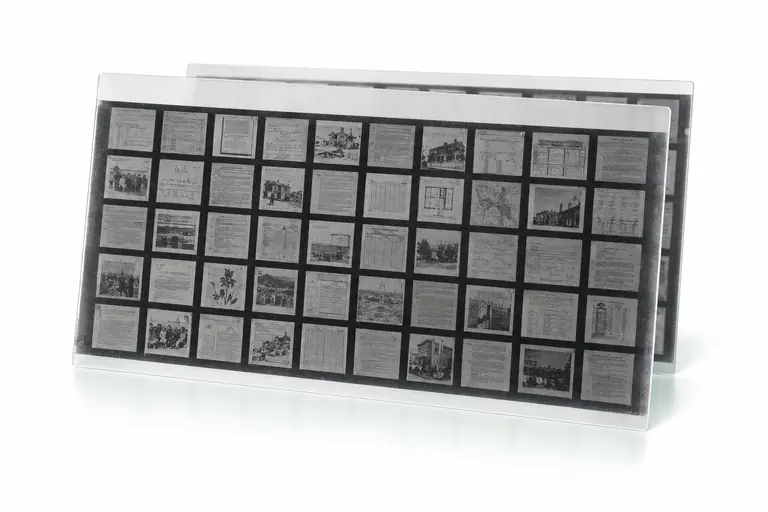
A flat sheet with a header and grid, or a transparent jacket carrier holding film strips in channels.

  • Source-document / step-and-repeatDocument images placed on a sheet.
    Guide
  • COMComputer-output reports recorded to fiche.
    Guide
  • JacketCut strips in transparent channels.
    Guide
  • UltraficheHigh reduction, above 90:1.
    Guide
03Card + mounted frame
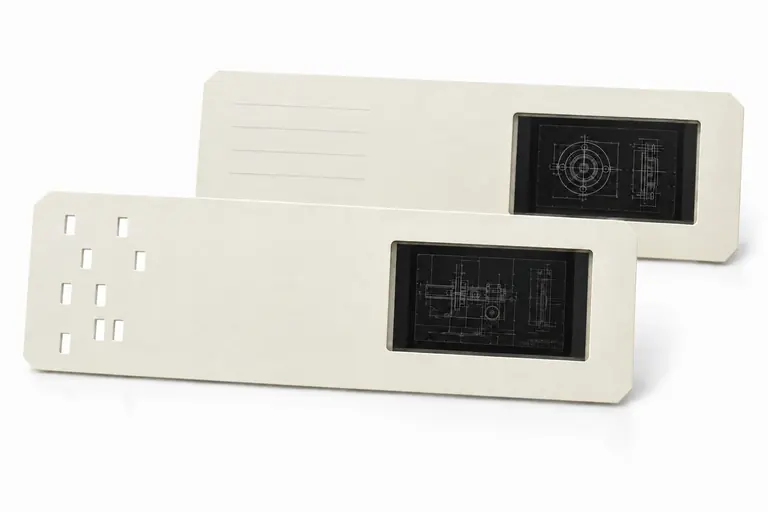
Original educational illustration of aperture cards with mounted film frames

Aperture card

A card carrying a mounted microfilm frame, often used with drawing or engineering records.

  • Punched / encoded metadataNeeds a collection code map.
    Guide
  • Unpunched / visible labelsUse labels and a drawing register.
    Guide
  • Raster or CADThe scan and the drawing file are distinct.
    Guide
Original material illustrations are for orientation only, not exact scale or collection specifications.
EXPLORE YOUR SPECIFIC MATERIAL

There’s more than one kind of microform.

14 specific guides

Illustrative microfilm reel; width, layout and polarity are explained in the accompanying schematic
Microfilm / Film width

16mm microfilm

A 16 mm-wide strip of microfilm whose carrier, layout, polarity, reduction, and material are identified separately.

Identification & scanning guide
Illustrative microfilm reel; width, layout and polarity are explained in the accompanying schematic
Microfilm / Film width

35mm microfilm

A 35 mm-wide microfilm strip whose carrier, layout, polarity and material must be identified separately.

Identification & scanning guide
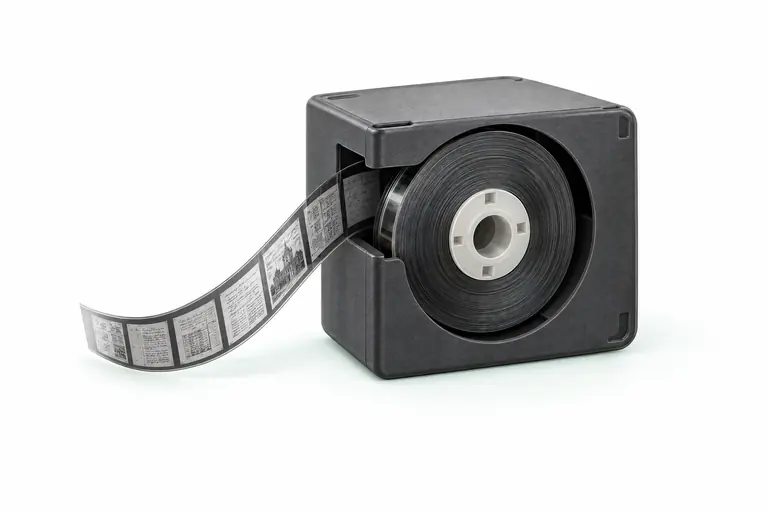
Generic single-hub microfilm cartridge with a free film leader
Microfilm / Single-hub carrier

Microfilm cartridges

A microfilm cartridge encloses film wound on one hub in a protective container, typically with a free end for compatible equipment.

Identification & scanning guide
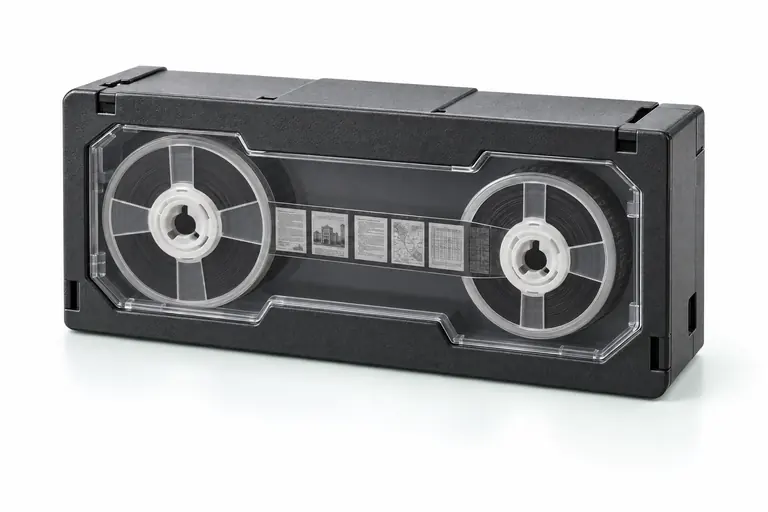
Generic microfilm cassette enclosing two film cores
Microfilm / Two-core carrier

Microfilm cassettes

An enclosed microfilm carrier whose film travels between two internal cores instead of winding from a single hub.

Identification & scanning guide
Illustrative microfilm reel; width, layout and polarity are explained in the accompanying schematic
Microfilm / Retrieval marks

Blipped microfilm and image marks

Roll microfilm with small rectangular optical marks in a dedicated channel used by compatible systems to count or locate image frames.

Identification & scanning guide
Illustrative microfilm reel; width, layout and polarity are explained in the accompanying schematic
Microfilm / Image layout

Simplex and duplex microfilm layouts

Simplex film shows one page per recorded image area; duplex film shows a two-page image pair, while carrier, width, polarity, and material remain separate facts.

Identification & scanning guide
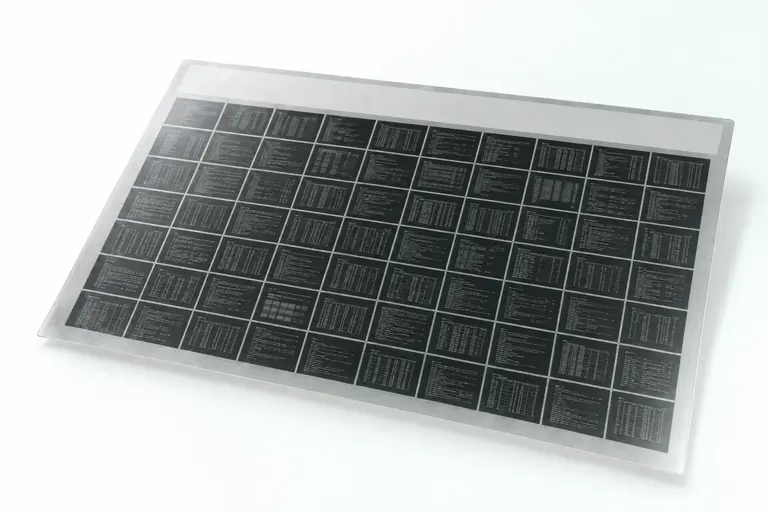
Illustrative source-document microfiche with a header above a grid of document microimages
Microfiche / Camera-produced fiche

Source-document and step-and-repeat microfiche

A flat fiche on which original documents were photographed as separate frames in a planned row-and-column grid.

Identification & scanning guide
Illustrative COM microfiche with densely arranged computer-report microimages
Microfiche / Computer-generated image source

COM microfiche

COM microfiche is a flat, grid-arranged microfiche whose images were recorded directly from computer output rather than photographed from paper documents.

Identification & scanning guide
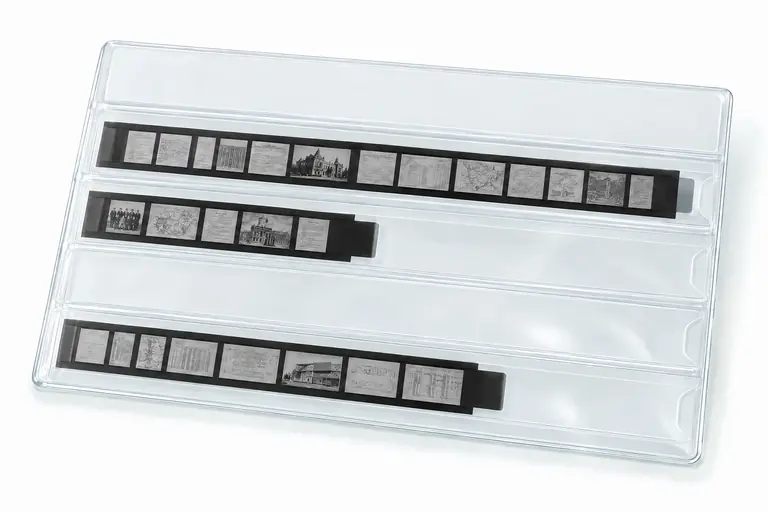
Illustrative transparent fiche jacket with separate film strips inside horizontal channels
Microfiche / Strip-in-channel carrier

Jacket microfiche

A transparent jacket carrier holds separate cut microfilm strips in one or more channels rather than one fixed image grid.

Identification & scanning guide
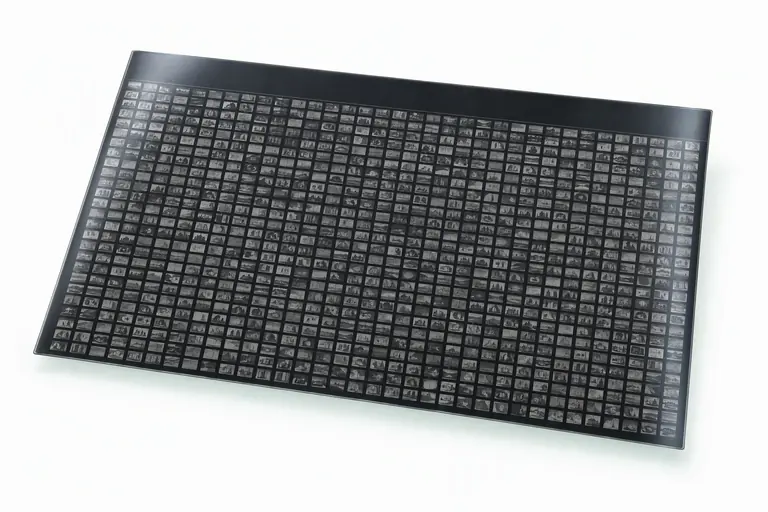
Illustrative ultrafiche sheet with a dense grid of very small microimages
Microfiche / Very high reduction

Ultrafiche

A flat microfiche with a verified reduction ratio greater than 90:1 and a nonstandard grid pattern.

Identification & scanning guide
Illustrative punched and unpunched aperture cards, each carrying a mounted film frame
Aperture cards / Encoded card metadata

Hollerith-punched aperture cards

Aperture cards with a mounted microfilm image and punched tabulating positions that may encode retrieval metadata when a code map is available.

Identification & scanning guide
Illustrative punched and unpunched aperture cards, each carrying a mounted film frame
Aperture cards / Visible-label indexing

Unpunched aperture cards

An unpunched aperture card has a mounted microfilm frame but no hole-coded metadata to decode, so identification begins with visible labels and related finding aids.

Identification & scanning guide
Illustrative microfilm reel; width, layout and polarity are explained in the accompanying schematic
Film attributes / Image polarity

Positive and negative microfilm/microfiche

Identify polarity by whether readable lines and characters are dark on light or light on dark, then record it separately from carrier and other film attributes.

Identification & scanning guide
Illustrative microfilm reel; a photograph alone does not identify the film’s image-forming material
Film attributes / Image-forming material

Silver halide, diazo and vesicular microforms

Record the image-forming material separately: silver halide is black-and-transparent, diazo forms a dye image, and vesicular uses heat-fixed bubbles.

Identification & scanning guide

These categories describe different attributes, not mutually exclusive boxes. A 16mm roll can also be negative, blipped or duplex. A fiche’s image source, carrier and reduction should be recorded separately.

FICHE FORMS AT A GLANCE

Four ways fiche can carry information

Form, production method and reduction are different dimensions, so these descriptions are not all mutually exclusive. A sheet count is not a page count, and grids vary by collection.

Original educational illustration of source-document microfiche with a header and document-image grid

Source-document / step-and-repeat

A source document is reduced and placed frame by frame onto a fiche sheet. The header is retained separately from the image grid.

Planning questionDoes the header establish the sheet’s control information?
Read the guide
Original educational illustration of COM microfiche with dense report frames

COM

Computer-output microfiche records computer-generated reports to fiche. COM is not a bibliographic catalog by definition.

Planning questionWhich report run or existing control marks identify the sequence?
Read the guide
Original educational illustration of a microfiche jacket with film strips in channels

Jacket

A jacket is a transparent carrier with separate cut strips in channels, not two fiche sealed together.

Planning questionAre the strips stable in their channels, and what identifies each strip?
Read the guide
Original educational illustration of ultrafiche with a dense microimage grid

Ultrafiche

Ultrafiche is a high-reduction fiche format; it is not defined by card holes.

Planning questionWhat reduction marking or sample frame should be reviewed first?
Read the guide
Illustrations show general form only. Header content, frame position, reduction marking and physical condition are reviewed with the specific material.
FILM ATTRIBUTES

Read film clues as separate attributes

Width, carrier, layout and polarity answer different questions. Keeping them separate creates a clearer description of the material in front of you.

01

Width

16mm35mm

16mm and 35mm describe measured film width, not a paper size.

02

Carrier

Original educational illustration of a single-hub microfilm cartridge
Cartridge · one hub
Original educational illustration of a microfilm cassette with two enclosed cores
Cassette · two cores

A cartridge has one hub; a cassette encloses two cores.

03

Layout

SimplexDocument
DuplexDocumentDocument

Simplex is one-up and duplex is two-up; this does not mean paper front and back.

Simplex and duplex guide
04

Polarity

ABC 123
Positive
ABC 123
Negative

Positive has dark text on a light background; negative reverses that relationship.

Positive and negative guide
Original educational illustration of a microfilm reel
SEPARATE MARKING LAYER

Blips or optical marks

Marks can appear as distinct rectangles along a film edge. Their meaning is collection-specific.

Blipped film image marks guide
All schematics are illustrative and not to scale. They describe visible format attributes only and do not diagnose image-forming chemistry.

Not sure what’s in the box?

You don’t need a complete technical description to start. Preserve the labels and order you already have; we can discuss identification and sample-based planning with you.

LET’S MAKE A PLAN

Your collection.
Our next conversation.

Tell us what you have—even if you’re not sure. We’ll help define the next step.

(800) 477-0847

225 Executive Dr
Moorestown, NJ 08057
Serving organizations nationwide.

Questions before you start?
01 Material02 Quantity03 Contact

STEP 01 / MATERIAL

What would you like to digitize?

Click an image to choose your material and go to quantities.