
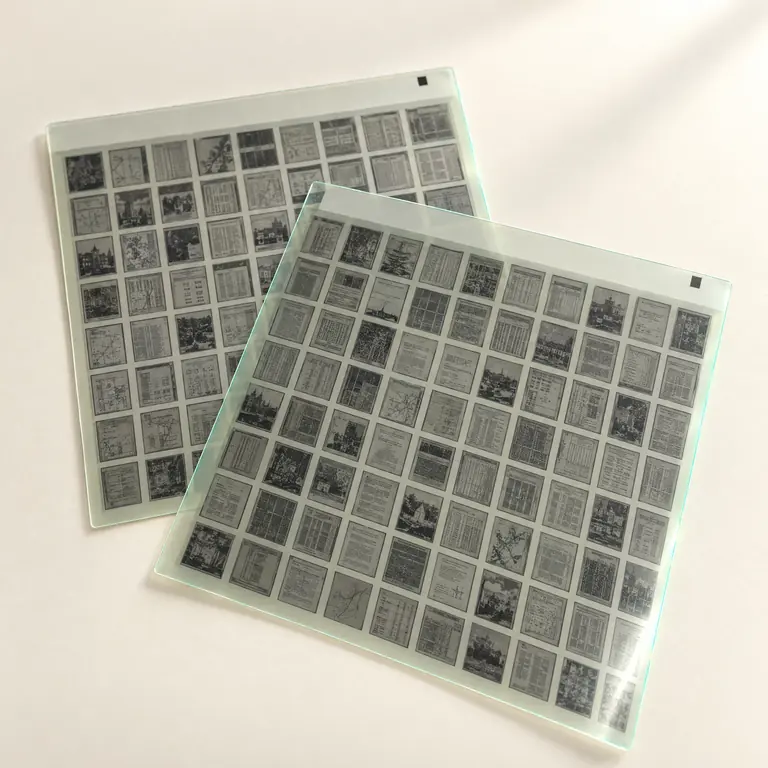
Four ways fiche can carry information
Form, production method and reduction are different dimensions, so these descriptions are not all mutually exclusive. A sheet count is not a page count, and grids vary by collection.
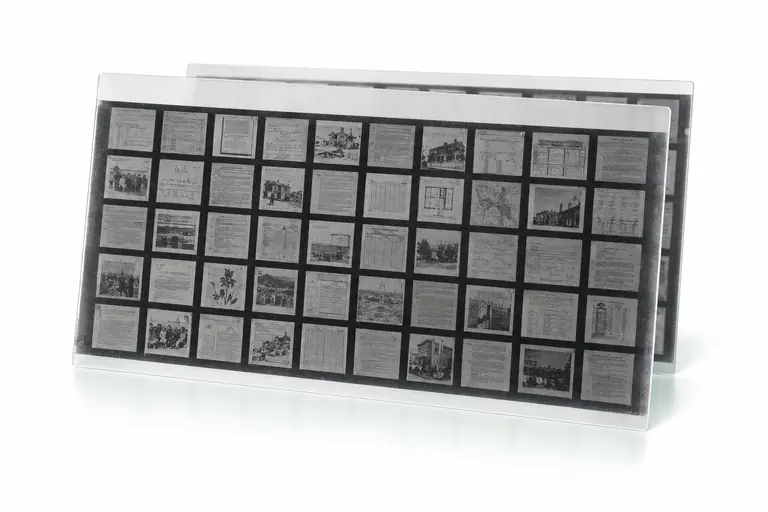
Source-document / step-and-repeat
A source document is reduced and placed frame by frame onto a fiche sheet. The header is retained separately from the image grid.
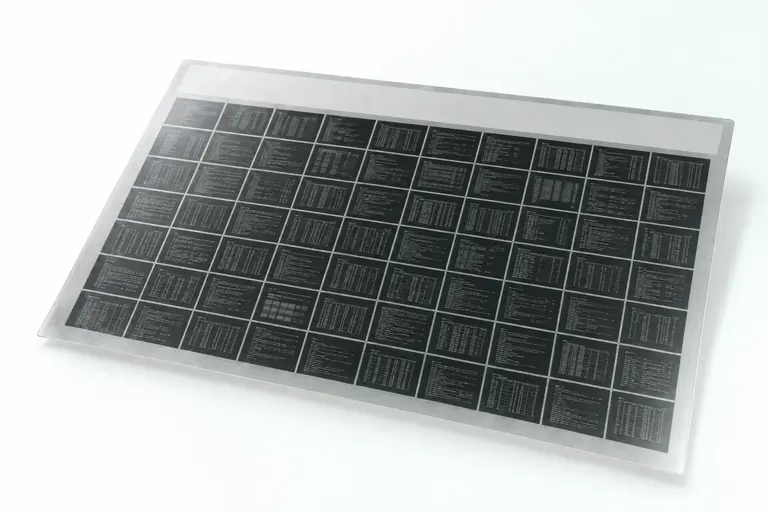
COM
Computer-output microfiche records computer-generated reports to fiche. COM is not a bibliographic catalog by definition.
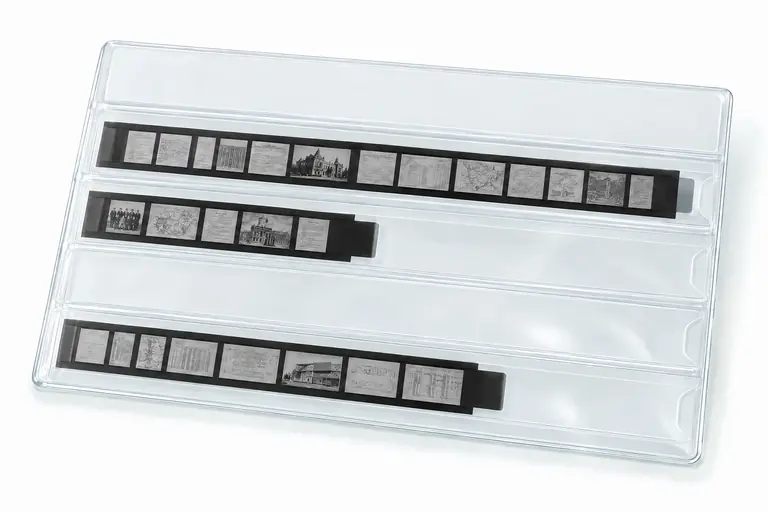
Jacket
A jacket is a transparent carrier with separate cut strips in channels, not two fiche sealed together.
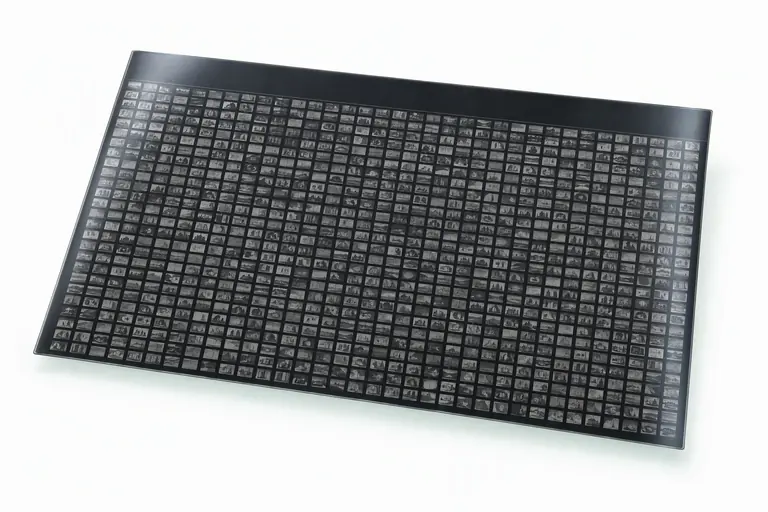
Ultrafiche
Ultrafiche is a high-reduction fiche format; it is not defined by card holes.
Same sheet. Different image density.
Name the fiche type before counting it
A common fiche sheet measures about 105 × 148 mm, but that size does not make every sheet alike. Source-document or step-and-repeat fiche records images photographed directly from documents. COM, or computer-output microfilm, records computer-generated output. Jacket fiche is a plastic carrier containing one or more channels of cut film strips; it is a filing form, not a fixed grid.
Ultrafiche refers to very high reduction, above 90:1 in Library of Congress guidance. Its layouts are not standardized, so a representative review is especially useful. Identifying the fiche header, polarity, reduction when known, image layout, and physical condition gives a stronger starting point than sheet count alone.
| Format | What to note for planning |
|---|---|
| Source-document fiche | Header, grid, sequence, reduction, frame and page relationships |
| Jacket fiche | Jacket ID, channel, strip sequence, shifted or empty channels |
| COM fiche | Report/system title, run date, report period, fiche and frame references |
| Ultrafiche | Actual layout, legibility sample, frame detection and OCR feasibility |
Treat headers, grids, and frames as evidence
The fiche heading can be an important finding aid, and the frame grid can support a stable reference such as row and column. Those relationships should be retained where they matter to a user. A jacket adds another layer: a frame may need to remain connected to its jacket, channel, strip, and visible label rather than be treated as an isolated page image.
Film quality, focus, density, scratches, curled sheets, shifted strips, and original reduction affect usable results. NEDCC notes that a poor-quality microfilm source produces a poor-quality scan. A sample can therefore inform the requested derivative, indexing detail, and OCR expectations without representing all fiche as identical.
Define retrieval at collection, fiche, and frame levels
For a collection, a project may use series, department, system, or date span. At fiche or jacket level, it may capture a header, fiche number, jacket number, format, sequence, and reduction. At frame level, a source-page number, row and column, account or case reference, report period, or other approved field can connect a user to a specific image.
OCR can help users search printed content, particularly on report-style output, but it does not replace fielded indexing when a record must be retrieved by a reliable identifier. Tiny characters, high reduction, complex columns, uneven density, damage, unusual fonts, and handwriting can limit text recognition.
Prepare a clear fiche project brief
Helpful starting information includes sheet, jacket, drawer, or box counts; visible headers; known grid patterns; any existing index; mixed formats; and the destination or retrieval question. Keep related fiche, jackets, labels, and existing order together during inventory. Record uncertainty rather than guessing a reduction ratio or film material from age alone.
National Microfilm can review scanning, indexing, OCR, and document-management delivery requirements around the collection you have. Requested fields, file roles, and the destination workflow are agreed for the project rather than inferred from the word microfiche.
Jacket fiche conversion: keep channels, strips and frames connected
A fiche jacket carries separate film strips inside channels. It should not be treated as an interchangeable grid of identical pages. Jacket identifiers, channel and strip positions, gaps and the frame sequence can be useful retrieval context. Confirm which relationships need to survive in the delivered files and metadata before deciding on sheet-level or frame-level grouping.
For COM and source-document fiche, the header and actual grid need their own review. Dense computer-output reports, variable strip arrangements and unusually high reduction can change the sample questions. Indexing fields are agreed from visible evidence or supplied finding aids; OCR is evaluated on representative material, not promised from a fiche type name.
| Fiche form | Useful planning question |
|---|---|
| COM reports | Which report/header, period and fiche/frame fields support retrieval? |
| Jacket fiche | Which jacket, channel, strip and frame relationships matter? |
| Source-document fiche | How should header and grid order relate to records? |
| Ultrafiche or nonstandard sheets | What can representative detail support at the proposed output size? |
Go deeper on the material you have.
Detailed identification clues, capture considerations and retrieval questions for these formats.
Common questions
Does 105 mm mean every fiche has the same grid?
No. It commonly describes the sheet size, while grid layout and frame count vary with production method and reduction.
Is a jacket fiche one image grid?
Not necessarily. A jacket may contain multiple channels and cut film strips with their own frame sequences.
Can COM fiche use the same index as paper files?
It can be mapped to an approved index, but report titles, run dates, periods, and frame references may be more useful than paper-folder conventions.
Sources & further reading
These references explain technical formats, standards or destination requirements. They do not imply endorsement of National Microfilm.