
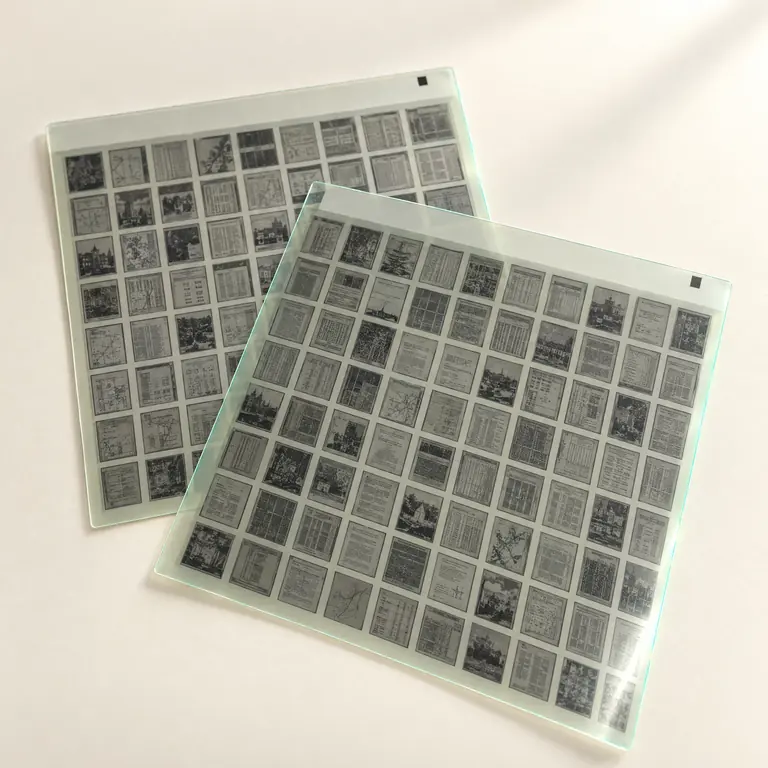
Four ways fiche can carry information
Form, production method and reduction are different dimensions, so these descriptions are not all mutually exclusive. A sheet count is not a page count, and grids vary by collection.
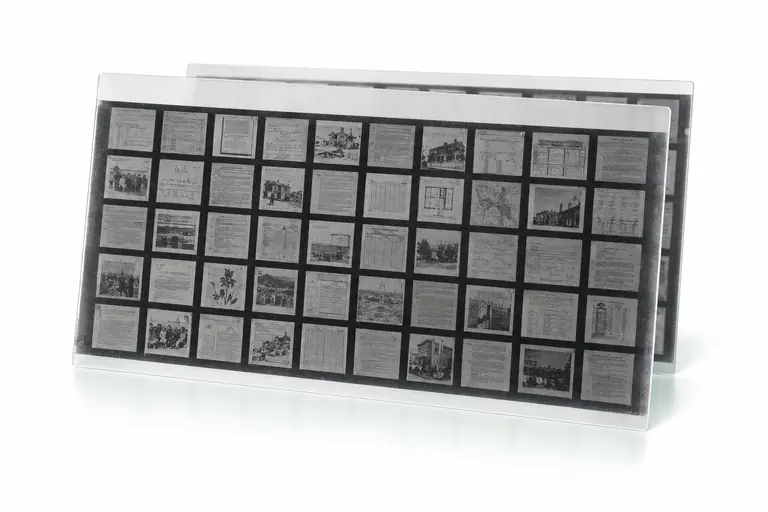
Source-document / step-and-repeat
A source document is reduced and placed frame by frame onto a fiche sheet. The header is retained separately from the image grid.
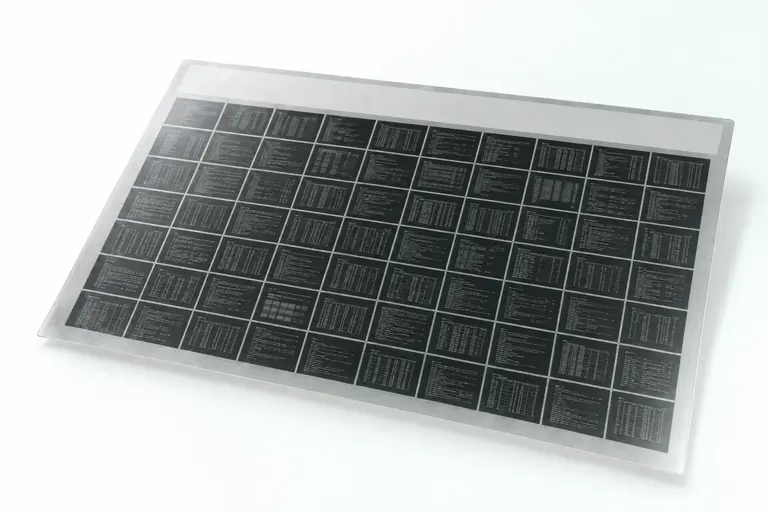
COM
Computer-output microfiche records computer-generated reports to fiche. COM is not a bibliographic catalog by definition.
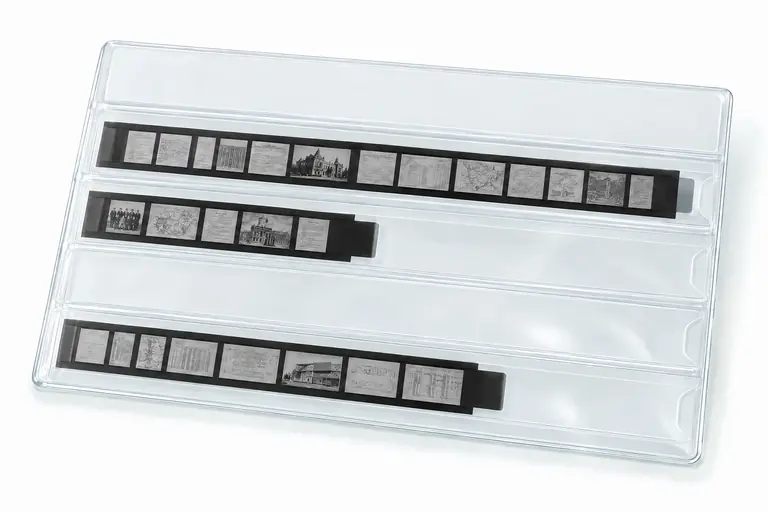
Jacket
A jacket is a transparent carrier with separate cut strips in channels, not two fiche sealed together.
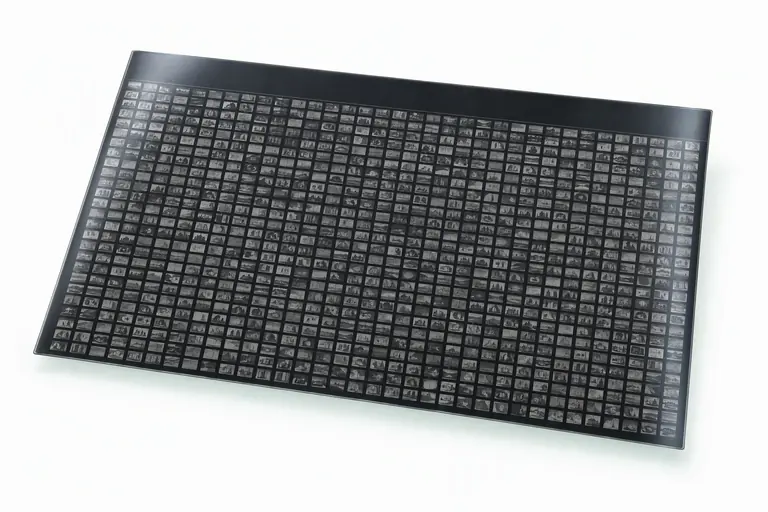
Ultrafiche
Ultrafiche is a high-reduction fiche format; it is not defined by card holes.
Same sheet. Different image density.
COM is computer-generated output on film
COM stands for computer-output microfilm. A recorder creates the film image from computer-generated signals, rather than a camera photographing a paper source. A COM fiche can display reports, lists, statements, or forms, but the film image should not be assumed to have a corresponding original paper document.
Library of Congress guidance gives a familiar, not universal, COM example: a 105 × 148 mm sheet at about 48:1 reduction with a 15-row by 18-column grid, totaling 270 images. Its report-style content often makes report title, run date, period, batch, account or case range, fiche sequence, and frame valuable retrieval context.
A jacket is a carrier with channels
The U.S. Government Publishing Office defines a jacket as a flat transparent plastic carrier with one or more channels into which processed strips of cut roll microfilm are inserted. The channels can hold different strips and frame sequences. A jacket’s visible label and channel arrangement can provide the context that ties individual frames to a source record.
Jacket preparation should note the jacket identifier, channel count, strip width when known, strip order, frame ranges, and visible damage or shifts. An empty channel, torn strip, weak splice, or shifted film is not a minor visual detail; it can affect frame detection and the association between a digitized image and its source location.
| Question | COM fiche | Jacket fiche |
|---|---|---|
| What does the term describe? | Computer-generated image production | Physical carrier and filing form |
| What may define retrieval? | Report/date/period/batch/frame | Jacket/channel/strip/frame |
| Does it imply a regular grid? | Often dense, but not universal | No; strips can vary by channel |
| Can both concepts matter? | Yes, if a collection contains COM images | Yes, if those images are held in jackets |
Use both facts when both exist
A collection can include computer-produced report images on strips filed in jackets. In that case, an index should not force a choice between COM and jacket. Retain the jacket relationship while capturing the report context that helps users retrieve the image. A frame can have both a physical source reference and a business retrieval reference.
Fictional example — no PII: a frame can be described as “Jacket J-071, channel 3, strip 2, frame 14; report ‘Inventory Summary’; period 1989-06.” This retains the filing trail and the report identity without claiming that every jacketed strip is COM.
Ask the questions that prevent false assumptions
Look for a visible header, report title, date, jacket label, channel boundaries, and strip condition. Ask whether an existing paper, database, or drawer index uses report periods, account ranges, file numbers, or jacket sequence. Preserve existing order because it can reveal the indexing logic even when a local code is undocumented.
For digitization planning, decide whether delivery should preserve jacket-level images or metadata, strip and frame references, OCR text, and customer-defined fields. National Microfilm can review these relationships as part of a project scope rather than applying one fiche template to every collection.
Go deeper on the material you have.
Detailed identification clues, capture considerations and retrieval questions for these formats.
Common questions
Can a jacket contain COM images?
Yes. COM describes the image-production method and a jacket describes the carrier, so both can be relevant to the same material.
Does a jacket always have the same number of channels?
No. Record the actual channel count, strip arrangement, and any empty or damaged positions.
Does COM guarantee good OCR?
No. OCR depends on the available image quality, reduction, density, fonts, layout, and other collection-specific conditions.
Sources & further reading
These references explain technical formats, standards or destination requirements. They do not imply endorsement of National Microfilm.