
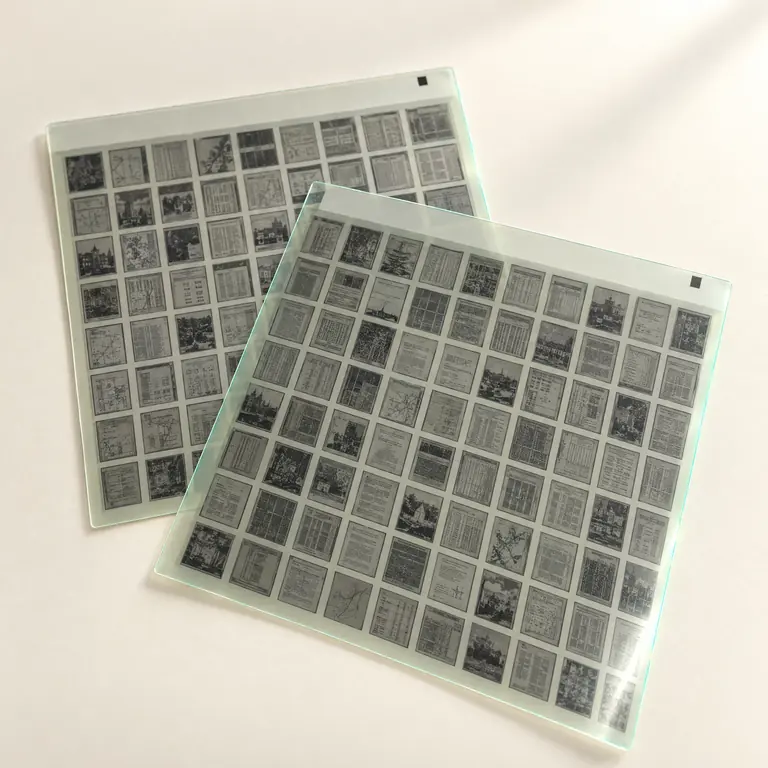
Example COM report retrieval fields
Examples only. Final fields, sources, and value rules depend on the collection and an approved field map.
Same sheet. Different image density.
Start with the report-retrieval question
COM is computer-generated output recorded as microform. For a report or statement collection, the useful first question is how someone must find a known result later: by report title, run date, reporting period, account or policy reference, printed page, or another field the collection owner approves. That question turns conversion from a sheet-count exercise into a retrieval plan.
A representative inventory can record visible headers, fiche sequence, apparent report groups, existing lists, mixed layouts, and condition observations. Existing order and related drawer or box labels may provide the context needed to interpret a fiche. Unknown values should remain unknown until collection documentation or an approved review establishes them.
Technical references:[1]
Keep report headers and source positions together
A microfiche is a transparent sheet with a readable identifying heading and a two-dimensional grid of microimages. The Library of Congress describes one common COM pattern as a 105 × 148 mm sheet at an effective 48:1 reduction with 15 rows, 18 columns, and 270 microimages. That is a useful recognition clue, not a requirement for every COM report collection.
Where a heading, fiche number, row and column, or printed page is visible or supplied in an approved index, it can preserve a route from a digital record back to its source. NIST's historical FIPS guide documents heading areas, grid layouts, and optional row-and-column identifiers; the project should retain only the references that fit the actual collection and approved mapping.
Use representative pages to define OCR scope
Dense report columns, small type, faded areas, and changes in film quality can affect whether visible text is useful for recognition. A representative sample can examine report headers, body pages, tables, control totals, and atypical or damaged frames before the requested OCR role is defined. It can also identify whether a readable image and structured fields are more important than text extraction for a particular retrieval task.
OCR may support search of machine-printed characters from the delivered image, but it does not replace a required report field or establish that every page will be searchable. Fielded indexing gives an agreed route to a known record; OCR is a separate, sample-informed access feature with its own exceptions and limits.
Technical references:[2]
Agree retrieval fields before production
The field map should name the source for each value: a fiche heading, a visible report page, an existing report list, or another collection-controlled reference. A field is not inferred simply because it may be useful. For example, an account, policy, or case identifier belongs in the map only when it is visibly present or supplied through an approved collection index.
The examples below are a starting point for report-style COM fiche. The final selection, format rules, and any controlled values are conditional on the collection and its approved mapping.
| Example field | Collection-specific source or purpose |
|---|---|
| Report or statement title | Visible fiche or report header |
| Run date or report period | Approved header, page, or legacy index value |
| Fiche sequence | Collection label or agreed sequence reference |
| Frame or row/column reference | Visible grid position when used by the collection |
| Printed page or record reference | Visible page value or approved source index |
Technical references:[3]
Map delivery to the approved destination
Images, OCR output when requested, and metadata can be related with a stable record identifier and an agreed manifest or sidecar. Before a broader release, a representative batch can check file-to-metadata relationships, report grouping, required fields, source references, and the documented handling of exceptions. That review helps make the handoff understandable without assuming a fixed repository schema.
Repository rules, configured fields, accepted file types, access arrangements, and import methods belong to the destination owner's workflow. National Microfilm can plan a customer-approved delivery package and field map; a platform name alone does not establish a native integration or automatic load.
Plan conversion for an authorized collection
This service is for organizations planning conversion of COM reports or statements they control or are authorized to provide for the project. If a collection belongs to a government body, library, or other institution, the organization retains decisions about rights, access, release, and the destination workflow.
National Microfilm does not provide citizen record lookup, public-record fulfillment, or a public portal for government or library holdings. Bring representative fiche, available report lists, and the retrieval question so the project can define capture, indexing, OCR scope, and delivery around the authorized collection.
Common questions
What does COM mean on report microfiche?
COM means computer-output microfilm: computer-generated output recorded as microform. It does not by itself establish a fiche layout, a report index, or an OCR result.
Can every COM report page be made searchable?
No. OCR results depend on the visible source image, including type size, density, layout, and condition. Representative testing can define an appropriate OCR scope, while approved indexing supports known-record retrieval.
Which fields can a COM report index include?
When visibly present or supplied in an approved collection index, fields can include report title, run date or period, fiche sequence, frame or row/column reference, printed page, and a collection-approved record identifier.
Can you look up a report for an individual from government or library fiche?
No. This is an authorized collection-conversion service, not a citizen record-lookup or public-record request service. The collection owner controls access and release decisions.
Sources & further reading
These references explain technical formats, standards or destination requirements. They do not imply endorsement of National Microfilm.